If you’re weighing up container storage vs self storage in Doncaster, the “better” option depends less on the label and more on how you’ll use it.
Choose drive-up container storage if you want quick loading from a car or van, easy access for bulky items, and a straightforward “store it and leave it” space.
Choose indoor self storage if you need a cleaner indoor environment, you’ll be visiting often on foot, or you’re storing items that benefit from more consistent indoor conditions.
Blue Box Storage is a family-run storage business based in Doncaster, South Yorkshire, offering drive-up container storage (10ft and 20ft), plus commercial and vehicle storage, with 24/7 access, CCTV, floodlighting and double-gated access.
What’s the difference between container storage and self storage?
Container storage is typically a steel shipping container (often 10ft or 20ft) on an outdoor site. You usually drive right up to the container door to load and unload.
Self storage usually means an indoor unit or room inside a building (sometimes on upper floors), accessed via corridors, lifts and trolleys. You still pack and move your own items, but the unit itself is indoors.
In Doncaster and around South Yorkshire, most people making this choice are really comparing drive-up access and practicality (containers) versus an indoor environment and foot-access convenience (self storage).
Container storage vs self storage: side-by-side comparison
Here’s a scan-friendly comparison to help you decide.
Feature
Drive-up container storage
Indoor self storage
Access for loading
Drive up and load at the door
Often corridors, lifts and longer walks
Best for bulky items
Great for furniture, white goods, garage items
Fine, but moving large items can be slower
Weather during loading
You’re outdoors while loading
Usually under cover indoors
Security basics to check
Gated entry, CCTV, lighting, robust locks
Building security, CCTV, alarms, locks
Vehicle access
Usually easiest for vans and trailers
Depends on parking and internal routes
Typical uses
House moves, renovations, business stock/tools, “store and leave”
Frequent access, smaller loads, indoor preference
Long-term storage
Common for long-term, especially for “out of sight” items
Common for long-term too
What to ask about
Container condition, ventilation, access hours, site lighting
Often strong value for space and drive-up convenience
Can cost more for indoor environment and facilities
Items you generally can’t store (both types)
Hazardous materials, illegal goods, perishables, anything that breaches the provider’s rules
Same (provider policies vary)
Access and convenience: which is easier day to day?
Direct answer: If you’re loading from a vehicle, drive-up container storage is usually faster. If you’re popping in regularly with a few small items, indoor self storage can feel easier.
When drive-up container storage wins
Drive-up access matters more than most people expect, especially if you’re moving house in Doncaster or doing a big clear-out.
Container storage is often simpler if you:
need to reverse a van close to the door
are storing heavy or awkward items (wardrobes, sofas, appliances)
want to load quickly and not fight with corridors or lifts
might be accessing the unit outside standard office hours (check access terms)
At Blue Box Storage, container storage is designed for straightforward loading, with 24/7 access and a well-lit, double-gated site.
When indoor self storage may suit better
Indoor units can be a good fit if:
you’ll visit frequently and often arrive on foot
you prefer a fully indoor route from entrance to unit
you’re storing items you’d rather keep away from outdoor humidity changes during loading
What are you storing? Best option by item type
Direct answer: For large, heavy household items and business equipment, drive-up containers are often the most practical. For delicate items you’ll access regularly (and want to keep in an indoor setting), indoor self storage may be preferable.
Here’s a quick guide.
Household furniture and appliances
Often best: drive-up container storage
Why: furniture, white goods and boxed household items are quicker to load straight from a van.
Boxes, seasonal items and “declutter” storage
Either works
Choose based on access: if you’ll rarely visit, a container can be ideal; if you’ll dip in and out, indoor may feel easier.
Tools, materials and equipment (tradespeople)
Often best: drive-up container storage
Why: easier vehicle access, easier to shift heavier kit. (Always check site rules about fuels, gases and hazardous items.)
Stock and ecommerce inventory
Depends on your workflow
If you’re collecting/dispatching from a vehicle and want simple loading, a container can work well.
If you’re picking small items frequently and want an indoor environment, indoor self storage may suit.
Documents and archives
Often best: indoor self storage for paper-heavy archives
Why: paper is sensitive to moisture, so indoor conditions can be helpful. If using a container, pack documents in sealed plastic archive boxes and keep them off the floor (more on this below).
How long are you storing for, and how often will you visit?
Direct answer: For a short, intense period (moves and renovations), drive-up container storage can save hours of loading time. For regular visits with smaller loads, indoor self storage can be more convenient.
Short-term: moving house and renovations
If you’re mid-move, you often care about:
speed of loading
room to manoeuvre a van
being able to get in and out without multiple trips through a building
That’s where container storage often comes out on top.
Long-term: “store and leave”
For long-term storage (downsizing, inheritance clearances, long-term decluttering), the best choice is usually the one that’s:
Security and peace of mind: what to look for (and what to ask)
Direct answer: Don’t just look for the word “secure”. Look for layered measures you can verify: gated access, good lighting, CCTV coverage, and clear rules about who can enter the site.
A practical security checklist for Doncaster storage shoppers:
Perimeter and entry: is access controlled (for example, gated or double-gated)?
Lighting: is the site well lit after dark (floodlighting)?
CCTV: is there visible CCTV coverage and signage?
Unit security: what lock type is recommended (a quality, purpose-made storage padlock is often worth it)?
Procedures: how is access managed and how are issues reported?
Blue Box Storage highlights CCTV, floodlighting and double-gated access, plus 24/7 access for customers.
Where CaSSOA Platinum fits in
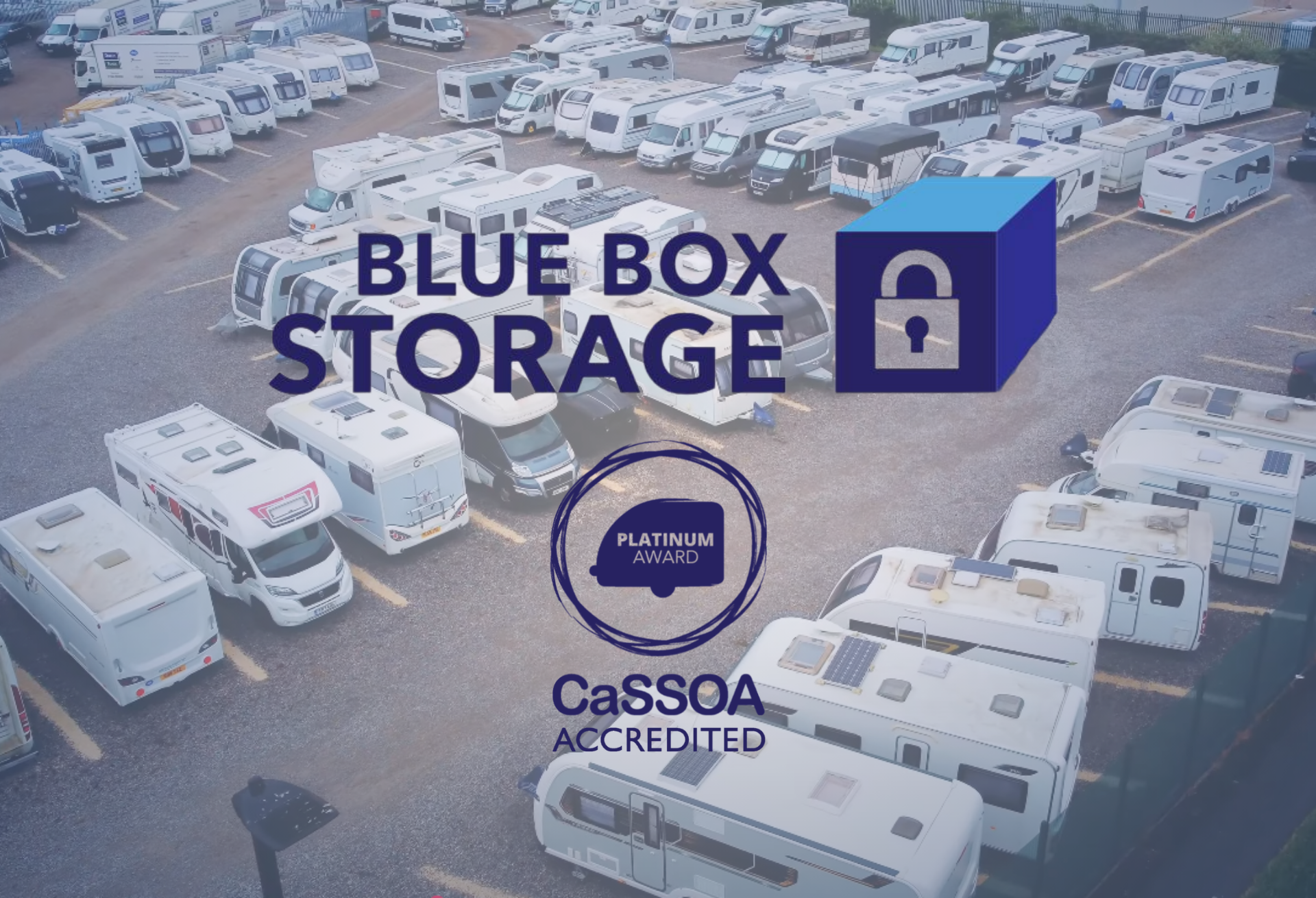
If you’re storing a caravan or motorhome, credentials can help you assess standards. Blue Box Storage holds CaSSOA Platinum status for its caravan storage, which is a recognised benchmark in the UK caravan storage sector. You can read about CaSSOA on the Caravan Storage Site Owners’ Association website.
Weather, damp and condensation: will items get damp in a container?
Direct answer: They can if you pack badly or store damp items. Most damp problems come from moisture you put in the unit (wet furniture, wet fabric, damp cardboard) and lack of airflow around boxes, not “rain getting in”.
Steel containers can experience temperature swings, which can lead to condensation. The good news is that you can reduce risk with sensible packing.
Practical damp-prevention steps (container or indoor)
1. Only store items completely dry. Don’t pack straight after cleaning carpets or upholstery.
2. Use plastic boxes for fabrics and paper. Cardboard is fine for many items, but plastic helps for moisture-sensitive goods.
3. Keep items off the floor. Use pallets or timber battens so air can circulate.
4. Leave small air gaps. Don’t press everything tight to the container walls.
5. Use moisture absorbers/desiccants for soft furnishings and boxed items.
6. Avoid vacuum bags for everything. They’re great for some fabrics, but not ideal for items that need airflow.
If you’re storing sofas, mattresses or important documents and you’re anxious about humidity, that’s a sign to consider an indoor unit, or to be extra careful with packing and elevation.
Cost and value: how to compare like-for-like in Doncaster
Direct answer: Price depends on size, location, access, security features and availability. The cheapest quote is not always the best value if access is limited or fees are unclear.
When comparing container storage vs self storage quotes around Doncaster, check:
Unit size and shape: are you comparing similar square footage or cubic capacity?
Access hours: is access truly convenient for you (some sites are limited to office hours)?
Transport costs: will you need a bigger van or more trips due to access limitations?
Insurance expectations: some providers require proof of cover or offer insurance as an add-on
Do you need insurance for storage in the UK?
Many storage providers expect customers to have insurance for stored goods, but requirements vary. If you’re unsure what cover you need, it’s worth reading the Financial Conduct Authority’s guidance on insurance products and checking your home or business policy details. See the FCA’s consumer information on insurance: FCA: Insurance.
(Always confirm requirements directly with the storage provider and your insurer.)
Doncaster “choose your situation”: which option tends to fit?
These are the real-life triggers we see most often around Doncaster and South Yorkshire.
Moving house
Often best: drive-up container storage
Reason: fast loading from a van and fewer trips through buildings.
Reason: you can store furniture, kitchen units and bulky items without constantly navigating indoor corridors.
Downsizing
Depends: if you’ll keep dipping in and out to sort, indoor self storage may suit; if you want to store “keep but not now” items for the medium to long term, containers are often practical.
Bereavement and house clearance
Often best: drive-up container storage
Reason: easy loading for furniture and boxes while you manage the paperwork and decisions at your own pace.
Tradesperson tool and material storage
Often best: container storage
Reason: vehicle access and easy loading. Make sure you understand prohibited items (fuels and hazardous materials are commonly restricted). For example, GOV.UK explains how to store petrol safely.
Ecommerce overflow and stock
Often best: depends on collection and dispatch routine
If you want flexible space for business items, compare options and then look at commercial storage for a business-focused setup.
Either works: choose based on how easy it is to load from your vehicle and how often you’ll access.
A 10-question checklist to decide quickly
Use this to choose the right option without overthinking it.
1. Will I be loading mainly from a van/car, or carrying items in by hand?
2. Do I need to access the unit outside office hours?
3. Am I storing bulky furniture or mostly small boxes?
4. How often will I visit: weekly, monthly, or hardly at all?
5. Do I need space to open doors and manoeuvre large items at the unit?
6. Am I storing anything moisture-sensitive (paper archives, fabrics), and have I packed accordingly?
7. Is the site well lit and access-controlled?
8. What lock type is recommended, and do I have a suitable lock?
9. Are there any fees or conditions that change the real cost?
10. If I’m a business, will I need space for deliveries, stock rotation, or tool loading?
If you want a clearer idea of space before you book, use Find the right storage size.
Next step in Doncaster: check access, size and availability
If drive-up access sounds like the right fit, start with Blue Box Storage container storage in Doncaster. You can also use the storage size guide to narrow down whether a 10ft or 20ft container is more realistic for your load.
For businesses needing flexible local space for tools, stock or equipment, see commercial storage. And if your decision is really about a caravan or motorhome, head to caravan storage.
Summary: container storage vs self storage in Doncaster
For most Doncaster households and trades, container storage vs self storage comes down to one question: do you want drive-up loading and simple access, or do you prefer an indoor unit for frequent visits and indoor conditions? Match the option to your item type, how often you’ll access, and what security and access features you can verify.
If you’re leaning towards drive-up storage, the most useful next step is to check sizes and availability on Blue Box Storage’s container storage page.
FAQs
What is the difference between container storage and self storage?
Container storage is usually a steel container on an outdoor site where you can drive up to the door to load and unload. Self storage is typically an indoor room or unit inside a building, accessed via corridors and sometimes lifts. Both let you store your own belongings, but access and loading convenience differ.
Is container storage cheaper than indoor self storage?
It can be, but not always. Prices depend on unit size, location, access hours, security features and availability. Container storage often offers strong value for space and drive-up loading, while indoor self storage may cost more due to the building environment and facilities. Always compare like-for-like sizes and check fees.
Is container storage secure?
It can be, if the site has layered security you can verify, such as controlled gated access, good lighting, CCTV and clear on-site procedures. You’ll also want a strong lock suited to storage use. Ask what security measures are in place and how access is managed before you choose any provider.
Will my items get damp in a storage container?
They can if you store items while they’re damp, pack them in moisture-trapping materials, or stack everything tightly against container walls. Reduce risk by storing items dry, using plastic boxes for sensitive goods, keeping items off the floor on pallets, leaving airflow gaps, and using moisture absorbers.
What can you store in a container storage unit?
Common items include furniture, appliances, boxed household belongings, renovation contents, tools and equipment, seasonal items, and business stock. What’s allowed varies by provider, so check terms and ask if you’re unsure. As a rule, providers restrict hazardous materials, perishables, and anything illegal.
Do I need insurance for storage in the UK?
Sometimes, yes. Many storage providers expect customers to have insurance for stored goods, either via their own policy or an arranged option. Requirements vary, so confirm what’s needed before you move items in, and check whether your existing home or business insurance covers items kept off-site.
Which is better for businesses: container storage or self storage?
For businesses that load from a van, rotate stock, or store heavier tools and equipment, drive-up container storage is often more practical. For businesses that pick small items frequently and want an indoor environment, indoor self storage can suit better. The right choice depends on your workflow, access needs and item type.
He is the Director of Blue Box Storage Doncaster and has helped hundreds of Doncaster residents safely store belongings in one of the highest rated outdoor self storage facilities in Doncaster on Google. He has ensured Blue Box Storage remains accredited with the Self Storage Association and a Platinum Accreditation with the CaSSOA.
Choosing between container storage vs self storage in Doncaster comes down to access, what you’re storing and how often you’ll need to visit. This guide compares drive-up containers and indoor units on convenience, security, damp prevention and value, with a quick checklist to decide.
Caravan storage can affect your insurance because insurers often rate risk based on the storage location, site security and whether the compound is CaSSOA accredited. This guide explains what to check with your insurer and what details to confirm with a storage provider before you move or renew.
Need storage for sports equipment in Doncaster? This guide explains what you can store, how container storage protects your kit, how to prevent damp and rust, and how to choose the right unit size at Blue Box Storage.
A well-organised kitchen makes everyday life noticeably easier. Whether you're preparing family meals, grabbing breakfast before work or trying to keep on top of the washing up, knowing exactly where everything belongs saves time, reduces stress and makes the room far more enjoyable to use. Learning how to organise a kitchen isn't about buying expensive […]
We use cookies on our website to give you the most relevant experience by remembering your preferences and repeat visits. By clicking “Accept All”, you consent to the use of ALL the cookies. However, you may visit "Cookie Settings" to provide a controlled consent.
This website uses cookies to improve your experience while you navigate through the website. Out of these, the cookies that are categorized as necessary are stored on your browser as they are essential for the working of basic functionalities of the website. We also use third-party cookies that help us analyze and understand how you use this website. These cookies will be stored in your browser only with your consent. You also have the option to opt-out of these cookies. But opting out of some of these cookies may affect your browsing experience.
Necessary cookies are absolutely essential for the website to function properly. These cookies ensure basic functionalities and security features of the website, anonymously.
Cookie
Duration
Description
cookielawinfo-checkbox-analytics
11 monthss
This cookie is set by GDPR Cookie Consent plugin. The cookie is used to store the user consent for the cookies in the category "Analytics".
cookielawinfo-checkbox-functional
11 monthss
The cookie is set by GDPR cookie consent to record the user consent for the cookies in the category "Functional".
cookielawinfo-checkbox-necessary
11 monthss
This cookie is set by GDPR Cookie Consent plugin. The cookies is used to store the user consent for the cookies in the category "Necessary".
cookielawinfo-checkbox-others
11 monthss
This cookie is set by GDPR Cookie Consent plugin. The cookie is used to store the user consent for the cookies in the category "Other.
cookielawinfo-checkbox-performance
11 monthss
This cookie is set by GDPR Cookie Consent plugin. The cookie is used to store the user consent for the cookies in the category "Performance".
viewed_cookie_policy
11 monthss
The cookie is set by the GDPR Cookie Consent plugin and is used to store whether or not user has consented to the use of cookies. It does not store any personal data.
Functional cookies help to perform certain functionalities like sharing the content of the website on social media platforms, collect feedbacks, and other third-party features.
Performance cookies are used to understand and analyze the key performance indexes of the website which helps in delivering a better user experience for the visitors.
Analytical cookies are used to understand how visitors interact with the website. These cookies help provide information on metrics the number of visitors, bounce rate, traffic source, etc.
Advertisement cookies are used to provide visitors with relevant ads and marketing campaigns. These cookies track visitors across websites and collect information to provide customized ads.