
A practical guide for Doncaster SMEs on using container storage to free up workspace, stay organised and delay the disruption and cost of relocating. Includes unit size advice, security and access considerations, and a move-in checklist.
Caravan for Storage: Should You Buy a Caravan Just to Store Stuff?

I hope you enjoy reading this blog post. If you'd like to learn more about our storage solutions click here.
Author: Harry Merrett | Director of Blue Box Storage Doncaster
Published:
January 19, 2026
If you are searching for a caravan for storage, you are probably trying to solve one simple problem. You need more space, and you are weighing up whether buying a caravan could be a practical way to store belongings long term.
On the surface, the idea makes sense. Caravans are enclosed, weather resistant, lockable, and widely available on the second hand market. Compared to building a shed or committing to ongoing storage fees, buying a caravan outright can feel like a cost effective solution.
But using a caravan for storage is not as straightforward as it first appears. Caravans are designed for travel and short term living, not for static storage. Issues such as damp, security, access, insurance, and long term cost are often overlooked until problems start to appear.
This guide looks at whether buying a caravan purely for storage is a good idea. It breaks down the real pros and cons, the types of caravans that work best, what you can and cannot store inside them, and how they compare to other storage solutions such as sheds, garages, self storage units, and storage containers.
By the end, you should be able to make a clear, confident decision based on your space needs, budget, and how long you actually need storage for.
Table of Contents
Quick answer: Is a caravan for storage a good idea?
A caravan for storage can work in the short term, especially if you already own one and have suitable land to keep it on. However, for long term storage, caravans are rarely the most secure, cost effective, or moisture resistant option. Purpose built storage solutions such as storage containers or self storage units are usually better suited for protecting belongings over time.
The appeal of using a caravan for storage
We realise that the idea of a caravan for storage is appealing for several reasons.
Caravans are fully enclosed and offer better protection than basic outdoor storage options. They have solid walls, roofs, and lockable doors, which makes them feel more secure than a garden shed.
They are also widely available. The second hand caravan market is large, with older models often selling for relatively low prices. This makes buying a caravan seem like a one off investment compared to paying monthly storage fees.
Another attraction is flexibility. A caravan can be moved if needed, and in theory, you retain the option to sell it later. For some people, this feels preferable to committing to a long term storage contract.
However, these perceived benefits need to be weighed against how caravans actually perform when used as static storage rather than for travel.

The real pros and cons of using a caravan for storage
Before deciding whether a caravan is a sensible storage solution, it is important to look at both sides realistically.
The potential advantages
A caravan provides better weather protection than many outdoor storage options. It keeps belongings out of direct rain and wind, which is a step up from tarps or poorly sealed sheds.
It offers enclosed, lockable space. This gives some level of security and privacy, particularly if the caravan is kept on private land.
For people who already own a caravan, using it for storage can feel like making use of an asset that would otherwise sit empty.
The limitations and risks
The biggest issue with using a caravan for storage is moisture. Caravans are highly prone to condensation, especially when they are not regularly heated or ventilated. Over time, this can lead to damp, mould, and damage to stored items.
Security is another concern. Caravan locks are designed to deter casual theft, not to protect high value goods. Caravans are also relatively easy to break into compared to storage containers or secure units.
Access can be awkward. Caravan doors are narrow, internal layouts reduce usable space, and bulky items can be difficult to load and unload without damage.
There are also ongoing costs. Even when used only for storage, caravans still require maintenance. Seals, tyres, locks, and roofs degrade over time, especially when stationary.
Insurance can be unclear. Many caravan insurance policies assume leisure use, not static storage filled with household or business items. This can leave gaps in cover if something goes wrong.
These drawbacks are often underestimated when people first consider buying a caravan for storage.
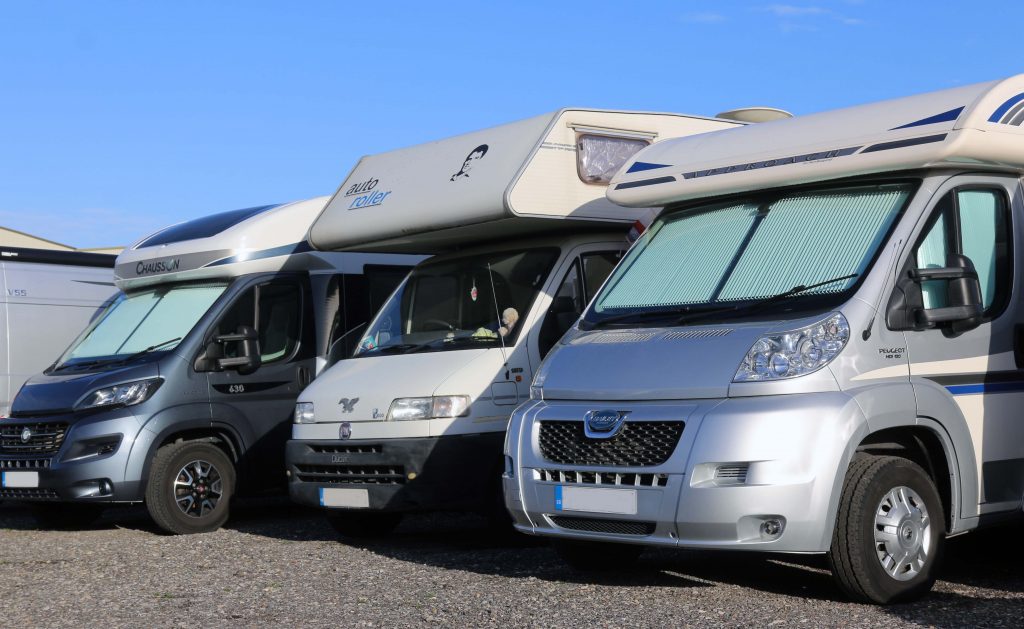
What makes caravans unsuitable for long term storage
Caravans are built with lightweight materials to make towing possible. Floors, walls, and fixings are not designed to bear heavy static loads for long periods.
Ventilation systems are designed for human occupancy, not for preventing condensation around stored items. When caravans are closed up and left unused, airflow is limited and moisture builds up quickly.
Internal layouts also reduce efficiency. Fixed seating, cupboards, beds, and appliances take up space and limit how items can be stacked or organised. Compared to a rectangular storage container, a caravan wastes a significant amount of usable storage volume.
Over time, this combination of moisture, limited airflow, and awkward layouts increases the risk of damage to furniture, fabrics, electronics, paperwork, and stock.
When using a caravan for storage can make sense
Despite the limitations, there are situations where using a caravan for storage can be a reasonable short term solution.
If you already own a caravan that is dry, well maintained, and parked securely, it can be used temporarily to store boxed items, tools, or seasonal equipment.
If you need storage for a short period and do not want to commit to a storage contract, a caravan may bridge the gap.
If the items being stored are not sensitive to moisture and are well protected in sealed containers, the risks are reduced.
However, these scenarios rely on careful setup and regular checks, which many people underestimate.

When using a caravan for storage is usually a bad idea
Buying a caravan purely to store belongings long term is rarely the best option.
If you plan to store furniture, mattresses, clothing, paperwork, or electronics, moisture damage becomes a serious concern.
If you need to store high value items or business stock, security limitations are a major drawback.
If access is important and you need to move items in and out regularly, caravan layouts quickly become frustrating.
In these cases, a caravan often ends up costing more in the long run through damage, maintenance, and replacement costs.
The real cost of buying a caravan for storage
One of the main reasons people consider a caravan for storage is cost. Buying a caravan outright can feel cheaper than paying monthly storage fees, especially if you find an older model at a low price. However, the true cost of using a caravan for storage is rarely limited to the purchase price alone.
There are several layers of cost that tend to be overlooked.
The upfront cost is the most obvious. Even an older touring caravan represents a significant initial outlay compared to basic storage options. On top of this, there may be transport costs if the caravan needs towing to your property or land. If you do not already have a suitable towing vehicle, this alone can change the economics of the decision.
Once in place, there are setup costs. Many caravans require basic preparation before they are suitable for storage. This can include replacing worn seals, adding additional locks, fitting ventilation aids, and installing moisture control solutions such as dehumidifiers or absorbers. None of these are expensive individually, but together they add up.
Ongoing costs are where most people underestimate the commitment. Caravans deteriorate when left stationary. Tyres degrade even if the caravan is not moved. Roof seals and window seals dry out and crack. Locks seize. Floors can soften if moisture is present. These issues still need addressing, even if the caravan is only used for storage.
Insurance is another recurring cost. Some policies do not cover caravans used purely for storage, particularly if they are filled with household or business items. Specialist cover may be required, which can be more expensive and still come with exclusions.
Finally, there is depreciation. Caravans lose value over time, especially if they are not maintained or show signs of damp. Unlike a storage fee, which ends when you stop paying, the cost of a caravan is locked in and resale value is never guaranteed.
When all of these factors are considered, buying a caravan for storage is rarely as cost effective as it first appears.
What can and cannot be stored safely in a caravan
Understanding what a caravan is suitable for storing is critical if you want to avoid damage.
Items that generally store well in a caravan are those that are robust and well packaged. Tools, garden equipment, camping gear, boxed household items, and items stored in sealed plastic containers tend to cope best. These items are less sensitive to fluctuations in temperature and humidity.
Seasonal items can also be suitable. Christmas decorations, outdoor furniture cushions sealed in airtight bags, and sports equipment are often stored short term without issue, provided the caravan is kept dry and ventilated.
| Item type | Suitable for caravan storage | Risk level | Notes |
|---|---|---|---|
| Tools and equipment | Yes | Low | Store in sealed containers |
| Camping and sports gear | Yes | Low | Allow airflow around items |
| Boxed household items | Yes | Medium | Avoid cardboard where possible |
| Furniture | Not recommended | High | Very prone to damp and mould |
| Mattresses | No | Very high | Absorbs moisture quickly |
| Clothing and textiles | Not recommended | High | Often develops musty odours |
| Paper and documents | No | Very high | Easily damaged by humidity |
| Electronics | Not recommended | High | Risk of corrosion |
| Food or chemicals | No | Very high | Pest and safety risk |
However, many common household items are far more vulnerable.
Soft furnishings such as sofas, mattresses, and upholstered chairs absorb moisture easily. Even small amounts of condensation can lead to mould and odours that are difficult to remove.
Clothing and textiles are also at risk. Fabrics stored in caravans often develop a musty smell over time, particularly if they are packed tightly with limited airflow.
Paper based items such as books, documents, and photographs are highly sensitive to moisture. Once damaged, they are often irreparable.
Electronics and appliances can suffer from corrosion caused by condensation, even if they are not directly exposed to water.
There are also items that should never be stored in a caravan. Flammable materials, chemicals, fuel canisters, and gas cylinders pose safety risks. Food items attract pests, which can cause damage far beyond the food itself.
The key takeaway is that caravans are not neutral storage environments. They require careful selection of what goes inside them.
How to set up a caravan for storage properly
If you decide to use a caravan for storage, preparation is essential. Simply loading items inside and locking the door is not enough.
Moisture control should be the first priority. Caravans need ventilation even when not in use. Roof vents and window vents should be left open where possible, while still maintaining security. Moisture absorbers can help, but they are not a complete solution and need replacing regularly.
Airflow inside the caravan matters just as much as ventilation. Items should not be packed tightly against walls. Leaving gaps allows air to circulate and reduces the risk of condensation settling on surfaces.
Weight distribution is often overlooked. Heavy items should be placed low and close to the axle line. Concentrating weight at one end can stress the floor and frame over time.
Access planning is also important. If you need to retrieve items regularly, pack with a clear route in mind. Caravans are narrow, and poorly planned storage quickly becomes impractical.
Security should be upgraded beyond standard caravan locks. Hitch locks, wheel clamps, and additional internal locking points improve deterrence, but they still do not match the security of purpose built storage.
Finally, regular checks are essential. Caravans used for storage should be inspected every few weeks for signs of damp, pests, or structural issues. This ongoing attention is often underestimated and is one of the reasons caravans perform poorly as long term storage solutions.
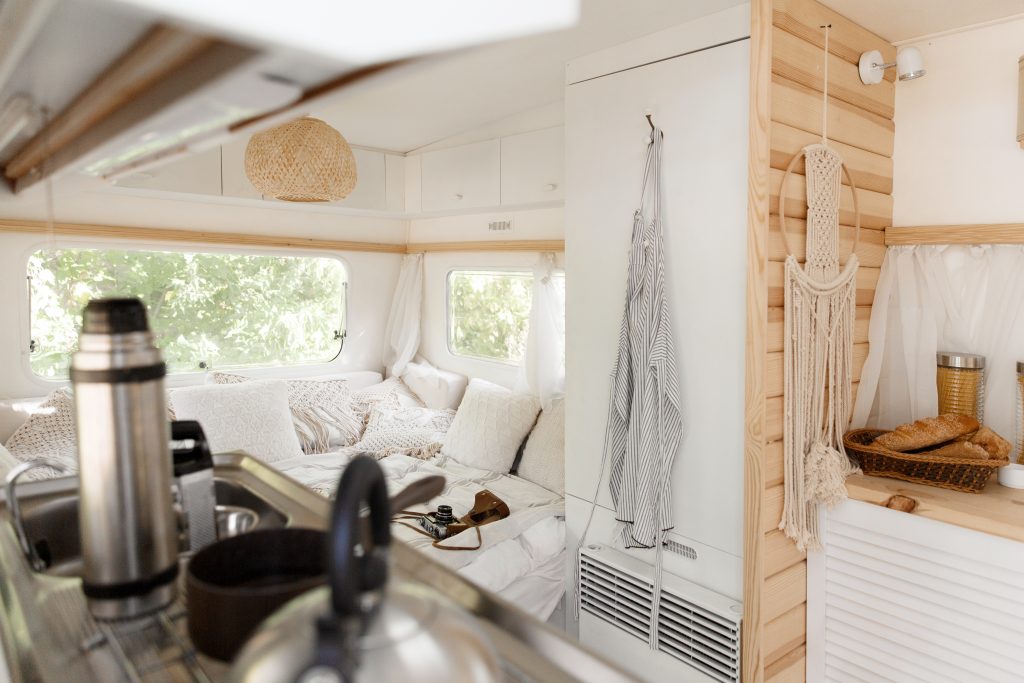
Choosing the best caravan for storage
Not all caravans are equally suited to storage. If you are set on buying a caravan for storage, certain characteristics matter more than others.
The most suitable caravans are simple in layout, with minimal fixed furniture. Open floor plans allow for better use of space and easier access.
Ventilation is critical. Caravans with good roof venting and fewer enclosed cupboards are less prone to condensation.
Condition matters more than age. A well maintained older caravan is far better than a newer one with existing damp issues. Signs of water ingress should be treated as a major warning sign, not a minor inconvenience.
Touring caravans are the most common choice, but they come with limitations. Payload capacity is restricted, and internal layouts are designed for comfort rather than storage efficiency.
Static caravans offer more space, but they introduce new challenges. They require suitable land, may be subject to planning considerations, and are still vulnerable to damp if not managed carefully.
Folding and pop top caravans are generally poor choices for storage. Fabric panels and complex mechanisms increase moisture risk and reduce security.
Motorhomes are rarely sensible for storage only use. They are expensive, complex, and present higher security risks if parked off site.
The ideal caravan for storage is dry, simple, well ventilated, and already owned. Buying one specifically for storage is far harder to justify.
Caravan for storage versus other storage options
To decide whether a caravan is right for storage, it helps to compare it to other common options.
Sheds are often the cheapest solution. They are suitable for low value items and garden equipment but offer limited security and poor protection from moisture over time.
Garages provide good access and reasonable security, but many households already use them for vehicles or general clutter. Space is often more limited than expected.
Self storage units offer controlled environments and flexibility, but access hours and costs vary. They are well suited for short to medium term storage of household items.
Storage containers are designed specifically for secure, weather resistant storage. Their rectangular shape allows efficient use of space, stacking, and easy access. They are far less prone to condensation when properly ventilated and maintained.
Professional caravan storage sites serve a different purpose. They are designed to store the caravan itself securely, rather than using the caravan as a storage unit.
| Storage option | Best for | Key benefits | Main limitations |
|---|---|---|---|
| Caravan for storage | Short term, low value items | Enclosed, movable, no monthly fee if already owned | High damp risk, limited security, inefficient space |
| Garden shed | Basic overflow storage | Cheap, easy access | Poor security, short lifespan, moisture issues |
| Garage | Frequent access | Convenient, sheltered | Limited space, often already in use |
| Self storage unit | Household moves, flexible storage | Controlled environment, good security | Ongoing monthly cost, access hours vary |
| Storage container | Long term, secure storage | Weather resistant, strong security, full usable space | Requires site access, not mobile |
| Caravan storage site | Storing the caravan itself | Secure, purpose built | Not suitable for storing belongings |
When comparing these options, it becomes clear that caravans sit awkwardly between solutions. They are not as cheap as sheds, not as secure as containers, and not as convenient as garages.
Caravan for storage vs storage container: usable space and practicality
One of the biggest misconceptions about using a caravan for storage is how much usable space it actually provides.
Caravans have curved walls, fixed furniture, and narrow access points. Much of the internal volume cannot be used efficiently for storage.
Storage containers, by contrast, are simple rectangular spaces. Every square metre is usable. Items can be stacked safely, aisles can be planned, and access is straightforward.
Ceiling height is another factor. Caravans are designed for seated and standing comfort, not vertical storage. Containers allow full use of height, which dramatically increases capacity.
For anyone storing furniture, stock, or bulky items, containers consistently outperform caravans in both capacity and practicality.
Common legal, insurance, and practical questions
Using a caravan for storage raises questions that do not always have clear answers.
Insurance policies vary widely. Some cover caravans only when used for leisure, others exclude contents entirely if used for storage. This needs checking carefully.
Keeping a caravan on a driveway or private land may be subject to local restrictions or site rules. While planning permission is not always required, neighbour complaints and covenants can create issues.
Liability is another consideration. If items are damaged or stolen, proving cover and responsibility can be difficult when a caravan is used outside its intended purpose.
These grey areas add uncertainty that does not exist with professional storage solutions.

Looking for a smarter alternative to using a caravan for storage?
If you are weighing up whether a caravan for storage is the right choice, it often helps to step back and look at what you actually need from a storage solution. Most people want three things. Protection from the elements, strong security, and easy access when they need it.
That is exactly what Blue Box Storage is built around.
Blue Box Storage provides secure, purpose built storage container units designed for storing household items, furniture, tools, equipment, and business stock. Unlike caravans, these containers are designed specifically for long term storage, with simple rectangular layouts that maximise usable space and reduce the risk of damage caused by damp or poor airflow.
For those who already own a caravan or vehicle, Blue Box Storage also offers dedicated caravan and vehicle storage. This allows you to store the caravan itself safely and securely, without needing to repurpose it as a storage unit or keep it at home.
With a focus on security, practicality, and flexibility, Blue Box Storage gives you a clearer, lower risk alternative to using a caravan for storage. Whether you need space for a short period or a long term solution, choosing a purpose built option can save time, money, and unnecessary stress.
If you are considering your options, exploring professional storage alongside the idea of a caravan for storage can help you make a more confident, informed decision.

About the author:
Harry Merrett
Director of Blue Box Storage Doncaster
He is the Director of Blue Box Storage Doncaster and has helped hundreds of Doncaster residents safely store belongings in one of the highest rated outdoor self storage facilities in Doncaster on Google. He has ensured Blue Box Storage remains accredited with the Self Storage Association and a Platinum Accreditation with the CaSSOA.
Follow Harry on LinkedIn here.
Get in touch to secure your storage
Recent Posts
Container Storage vs Self Storage: Which Is Better in Doncaster?
Choosing between container storage vs self storage in Doncaster comes down to access, what you’re storing and how often you’ll need to visit. This guide compares drive-up containers and indoor units on convenience, security, damp prevention and value, with a quick checklist to decide.
Does Caravan Storage Affect Insurance? What Owners Should Check Before Choosing a Site
Caravan storage can affect your insurance because insurers often rate risk based on the storage location, site security and whether the compound is CaSSOA accredited. This guide explains what to check with your insurer and what details to confirm with a storage provider before you move or renew.
Storage for Sports Equipment in Doncaster: Secure Container Storage
Need storage for sports equipment in Doncaster? This guide explains what you can store, how container storage protects your kit, how to prevent damp and rust, and how to choose the right unit size at Blue Box Storage.
Our Accreditations

Visit us
Unit 1 Sandall Business Park, Sandall Stones Road, Kirk Sandall, Doncaster DN3 1RW
Phone
01302 593593
Email
[email protected]
© Copyright 2024 Blue Box Storage. All rights reserved.
Sitemap